10/13/15

Focus RS Engineers Drop the Hammer: Hot Hatch Buyers to Get Monstrous Output of 350 Horsepower, 350 Lb.-Ft.

Hero Image
  • Unique 2.3-liter EcoBoost® engine powering all-new Focus RS certified at 350 horsepower at 6,000 rpm on way to 6,800-rpm redline
  • Exclusive Focus RS turbo makes peak boost of 23.2 psi, with peak torque certified at 350 lb.-ft. at 3,200 rpm
  • Innovative Focus RS feature restarts engine for drivers in the event of a stall
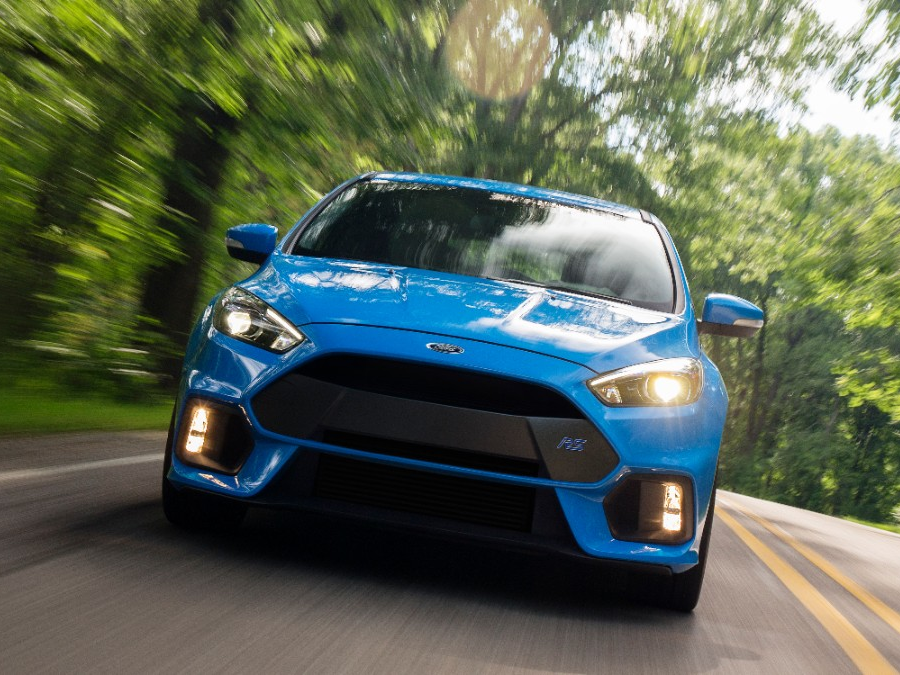
DEARBORN, Mich., Oct. 12, 2015 – The unique EcoBoost® engine in the all-new Focus RS will produce 350 horsepower – far exceeding original estimates of 315 – along with 350 lb.-ft. torque.

And yet even with all that torque, the manual-only hot hatch will be especially forgiving in the event a driver stalls the engine, as Focus RS will debut with a trick feature called stall recovery. In other words, there will be no need for drivers to manually restart the engine or move the gear selector to neutral as the innovative technology allows the driver to simply push the clutch back in after a stall and the engine will restart.

“We knew we wanted to put start-stop technology on the RS,” explained Tyrone Johnson, engineering and vehicle manager, Ford Performance Europe. “So we said, ‘What if we went one step further, and controlled for engine stall at launch using the same technology?’ Well, that’s exactly what we did and it’s just as fast as our start-stop technology.”

The monster output the Focus RS engine achieves is due to its all-new low-inertia twin-scroll turbocharger with a larger compressor wheel that delivers more airflow and power throughout the rev range. Peak turbocharger boost is 23.2 psi.

Backing up this increased output is a large intercooler to maximize charge density. Air itself is delivered through a low-restriction intake manifold on the front end with a high-performance exhaust. The system includes an electronically controlled valve that optimizes back pressure and exhaust volume level.

Stout, high-tensile cast-iron cylinder liners are used to enhance the robustness of the engine, while a high-performance head gasket brings improved thermal capability.

Additional space created in the front of the car allowed engineers to deploy a larger radiator than what’s used on other Focus models for enhanced cooling. 

Despite the engine’s high output of 152 horsepower per liter, RS engineers tuned this EcoBoost to deliver right off idle all the way on up to a free-spinning 6,800 rpm, with an especially chunky midrange power delivery.

Focus RS is the latest car to be unveiled as part of a new golden age of Ford Performance. The plan calls for bringing more than 12 high-performance vehicles to market worldwide through 2020.

Developed by a small team of Ford Performance engineers in Europe and the United States, the third-generation Focus RS follows on the heels of the much-loved models launched in 2002 and 2009. The 2016 Focus RS is the 30th car globally to wear the vaunted RS badge, joining such legendary models as the 1970 Escort RS1600, the 1984 mid-engine RS200 Group B rally car, 1985 Sierra RS Cosworth and 1992 Escort RS Cosworth.
 
Production of Focus RS with 2.3-liter EcoBoost begins later this year.

10/12/15

Coast-to-Coast in the New 2016 Ford Explorer


Jeremy and Tricia Collins, along with their two children, put the new 2016 Ford Explorer to the ultimate test — driving coast-to-coast across the back roads of America from Portland, Oregon to Portland, Maine.

10/11/15

Carryless Movement | 2015 Ford Trends


Out with the purse and the messenger bag—today, people do not want to carry stuff, and increasingly, they don’t need to.

Bitcoin, Apple Pay and Google Wallet are displacing the need for physical wallets and money clips. The rise of subscription-based shopping services means we can avoid the store. Wearable gadgets and smartphone apps have dismantled the need for physical keys. With these technologies, consumers are able to pare necessities down to their essence—less baggage, more nimbleness.

10/10/15

Ford Escape: Driving Growth in America's Small SUV Segment for 15 Years

Hero Image

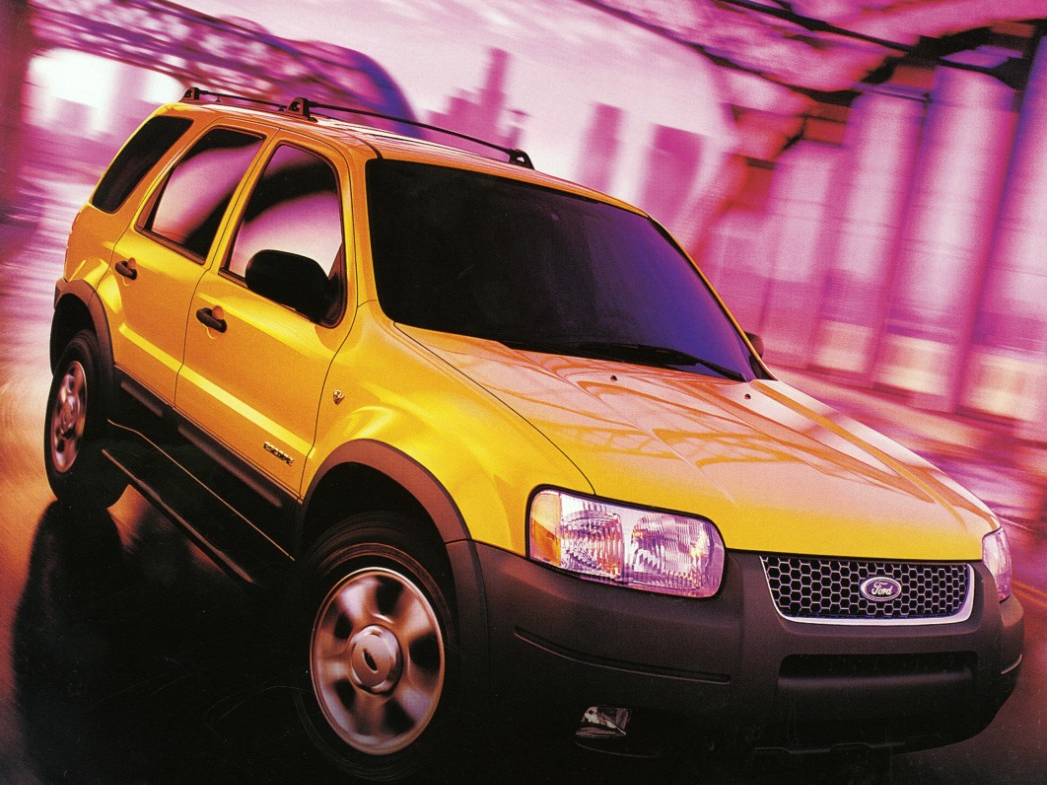
DEARBORN, Mich., Oct. 7, 2015 – When the all-new Ford Escape debuted at the 2000 North American International Auto Show, the small SUV segment in North America was still quite small, with only a few competitors. But Ford felt it had something unique – the perfect go-anywhere offering for an emerging segment. Ford was right.

Escape was touted for its four-wheel-drive capability, refined ride and handling, and outstanding fuel economy – all of which combined to make it an instant contender in the new small SUV segment. Sales of the new Escape began in August 2000, with advertising and the official marketing and sales launch Oct. 8.

Fifteen years later, Escape remains a top-selling vehicle in its segment, as well as a top-selling vehicle in the Ford lineup. In 2014, Ford sold more than 300,000 Escapes in the United States.  

Escape also helped propel the small SUV segment into one of the largest in the industry. In 2000, when Escape debuted in the United States, small SUVs accounted for 5 percent of total industry sales. By the end of 2014, the segment had grown to 15.7 percent.

10/09/15

SEMA 2015 | Explorer Sport


Award-winning builders take the 2015 Ford Explorer Sport to new levels at SEMA this year.

Ranging from brutish off-roaders to the ultimate street cruisers, this tricked-out #FordSEMA SUV features both posh interiors and head-turning exterior mods to capture imaginations.

Ford continues its unrivaled support of the SEMA show this year with the largest OEM stand and over 50 vehicles on display. A step beyond display vehicles, Ford Out Front also offers attendees a unique experience of watching or riding in one of our performance car or trucks on a closed course.

10/06/15

L.A. Drivers Fear Backing Onto Busy Roads More Than Ghosts, Flying; Ford Showcases Tech to Make Life Easier

Hero Image

  • Los Angeles drivers fear backing out onto a busy street more than ghosts or flying – according to an independent study commissioned by Ford, which brings its Ford Smart Mobility Tour to town
  • Ford Smart Mobility is the company’s plan to use innovation to develop the next advances in connectivity, mobility, autonomous vehicles, the customer experience and big data. A major area of focus is multimodal transportation, including developing an app that facilitates routing and integrates seamlessly with vehicles and electric bikes
  • To improve the driving experience, Ford has introduced several driver-assist technologies such as its Blind Spot Information System and Pro Trailer Backup Assist, as well as semi-autonomous technologies including a lane-keeping aid and active park assist
LOS ANGELES, Oct. 5, 2015 – Angelenos worry more about backing out onto a busy street than ghosts or flying – according to a recent survey.

The survey, conducted by independent research company Penn Schoen Berland, examined driving-related fears, as well as public receptiveness to driver-assist and semi-autonomous technologies designed to ease driver anxiety and commuting hassles.

More L.A. survey respondents said they are more afraid of backing out onto a busy street (26 percent) than ghosts (16 percent) or flying (15 percent). In fact, visibility while driving is a leading concern for Los Angeles drivers, the PSB survey found. Three out of four said monitoring blind spots is a concern, while seven out of 10 listed backing out onto a busy street is a concern, and not being able to see all angles when backing up or driving in low-visibility situations as worrisome.

L.A. drivers find technology to alleviate these driving worries both popular and compelling:
 
  • Nearly seven in 10 said they are more likely to purchase a vehicle that includes technology to alert you if someone is in your blind spot, while six in 10 said they are more likely to buy one with a rear view camera
  • Nine in 10 said they are more comfortable in a car with blind spot alert technology (and 61 percent are much more comfortable with it)

Most L.A. residents described blind spot alert technology as “useful” (63 percent) and “safe” (52 percent). Nearly 90 percent of L.A. residents said they would feel more comfortable driving a car with a rear view camera – 52 percent say they would be much more comfortable 6 in 10 described rear view cameras as “useful” - nearly half described the cameras as “safe.”

Ford Smart Mobility Tour

This week Ford brings its Ford Smart Mobility Tour to L.A. The tour highlights the company’s driver-assist features that can help address driving-related fears, including BLIS® and semi-autonomous driving technologies, along with the Ford Smart Mobility plan.

Ford Smart Mobility is the company’s plan to take it to the next level in connectivity, mobility, autonomous vehicles, the customer experience and big data. Ford introduced the plan at CES in January, 2015 along with 25 initial experiments aimed at better understanding consumers’ mobility needs around the globe.

“Our smart mobility vision at Ford is about changing the way the world moves,” said Ken Washington, Ford vice president, Research and Innovation. “We are transitioning from experimentation to the start of implementation, beginning with the Go Drive and Peer to Peer car sharing pilots. Our goal is to make people’s lives better by helping them more easily navigate to where they want to go, using one or more interconnected modes of transportation.”

In addition to the Smart Mobility Tour, Ford will host a panel discussion moderated by Susan Carpenter, motor critic at The Orange County Register and The Wheel Thing contributor at KPCC-FM. The panel will include:
  • Mike Tinskey, director of vehicle electrification and infrastructure, Ford Motor Company
  • Claire Bowin, city planner, Los Angeles City Planning Department
  • Hilary Norton, executive director, Fixing Angelenos Stuck in Traffic (FAST)
  • Brian Taylor, director, UCLA Institute for Transportation Studies

The event will commence at 10 a.m. today at the William Turner Gallery at Bergamot Station Arts Center in Santa Monica.

Driver-assist and semi-autonomous tech for today

To improve today’s driving experience, Ford has introduced driver-assist and semi-autonomous technologies such as active park assist to help drivers parallel and perpendicular park more easily. Driver-assist technologies include lane-keeping aid to help drivers stay in their lane and BLIS, which alerts drivers to vehicles detected entering their blind spots.

To stay connected while in motion, SYNC® 3, Ford’s all-new communications and entertainment system, features faster performance and conversational voice recognition, along with an available intuitive smartphone-like touch screen.

Ford offers more vehicle nameplates in the United States with active park assist, rear cross-traffic alert, lane departure warning with lane-keeping aid and blind spot monitoring than any other manufacturer – according to automotive research firm SBD. Ford also leads in four segments, offering vehicles with the most available driver-assist features among mainstream vehicles in the country:
 
•     Large light-duty pickup – F-150
•     Midsize SUV – Edge and Explorer
•     Midsize car – Fusion
•     Large car – Taurus

Ford will demonstrate its new Pro Trailer Backup Assist feature that will be available on the 2016 F-150. The technology helps to ease the anxiety level of backing a trailer – which can be a challenging task for the novice and tricky even for those with trailering experience.

Multimodal mobility solutions

In many large cities, driving your vehicle directly from home to work is challenging due to traffic congestion. Ford believes solutions for multimodal journeys can make travel to and within urban areas more convenient. The company is studying how electric bicycles and mobile application technology can work seamlessly with cars and public transport to deliver faster and easier daily commutes and help businesses operating in urban environments.

Ford’s electric bicycle experiments include:
  • MoDe:Me, introduced in March, is intended to keep the urban commuter moving in congested traffic
  • MoDe:Pro is built for urban commercial use, and is designed to stow in a commercial vehicle such as Ford Transit Connect
  • MoDe:Flex is easily reconfigurable for different customer needs. The bike’s center frame assembly includes the motor and battery, while the front and rear assemblies and wheels can be configured for road, mountain or city riding

Ford’s electric bicycle prototypes fold easily into Ford vehicles, and integrate seamlessly with the MoDe:Link app, which can be paired with a smartwatch.
 
This includes the “no sweat” mode, which increases electric pedal assist based on heart rate ensuring a rider gets to his or her destination without breaking a sweat. The app also provides safety notifications. Hazards, such as potholes ahead, are signaled through vibrating

10/04/15

Easier Upfitting in the 2016 Ford Medium Duty Truck


Upfitting is easier than ever in the new 2016 Ford Medium Duty truck. Watch as Jon Taffer, business consultant and TV star, shows these real fleet buyers how nothing gets in the way of installing equipment, saving them time and money.

10/03/15

All-New 2017 Ford F-150 Raptor Prototype Testing at Silver Lake Sand Dunes


This summer an engineering prototype of the all-new 2017 F-150 Raptor tackled the dunes at Silver Lake, Mich., State Park. Redesigned, larger FOX Racing Shox with more suspension travel and all-new terrain management technology help F-150 Raptor tackle the toughest of surfaces. An available Torsen front differential increases off-road capability further. The system increases grip significantly for the front end of the truck and allows it to pull itself over obstacles and up steep grades – even when traction is split between the front tires. The all-new 2017 Raptor is powered by Ford’s new, second-generation 3.5-liter EcoBoost® engine. The 2017 F-150 Raptor goes on sale in Fall 2016.

10/02/15

Entrepreneurs Rely on Flexible, Tech-Savvy Vehicles to Grow Small Businesses, Survey Shows

Hero Image

  • More than half of small business owners use their business vehicles for personal travel, finds a new survey by Ford and Manta; nearly 75 percent of respondents say they would be more productive if their vehicle enabled them to make hands-free calls on the road with technology like Ford SYNC 3
  • Purchase price, maintenance and fuel costs are the top considerations for business owners looking to purchase a new vehicle
  • Three small business owners awarded $5,000 to customize their Ford Transit and Transit Connect vans in the Driving the American Dream contest conducted by Ford and Manta
DEARBORN, Mich., Oct. 1, 2015 – Small business owners often need vehicles that can do double duty – helping them grow their businesses while keeping their busy families on the move, finds a new survey by Ford and Manta, an online resource dedicated to small business.
Only 42 percent of respondents use their business vehicles for business reasons all the time. One quarter drive their business vehicle for nonbusiness-related travel 25 percent of the time, while another 17 percent drive their business vehicle for personal use half the time.
“Dual use was one of the key considerations in the design of Ford Transit Connect,” says Yaro Hetman, Ford brand manager for Transit, Transit Connect and E-Series. “Customers appreciate the seats fold down for deliveries during the week and the vehicle works well as a family van on weekends.”
Approximately 13 percent of small business owners surveyed rely on vans for their businesses. One quarter drive trucks, 16 percent drive another type of service vehicle, 23 percent drive cars and 18 percent drive SUVs.
Regardless of which vehicle they choose, flexibility is key for these entrepreneurs. Nearly half report they use their business vehicle primarily for driving themselves to appointments, 36 percent use it to carry equipment to job sites, 30 percent make deliveries and 8 percent transport customers.
“One day we’re using our Transit to move merchandise between stores, the next day we’re using it for event support for charity functions,” says Stuart Hunter, founder of Columbus, Ohio-based roll:, which sells bicycles, clothing and gear. “The next day it’s supporting our race team – where it becomes a mobile changing room. The versatility was really key to us.”
Hunter is one of three small business owners who won $5,000 to upfit Ford Transit and Transit Connect vans in the Driving the American Dream contest conducted by Ford and Manta. The other winners are Steve Ozment, owner and operator of Flowerama in Columbus, and Manuel Mendoza, owner of La Patisserie, a bakery and catering company in Charlotte, North Carolina.
Connectivity technology boosts productivity
 

Business errands are made more efficient when entrepreneurs can leverage mobile technology in their vehicles, according to the survey.
Almost three-quarters of respondents say they would be more productive if they could make hands-free calls through a Bluetooth-enabled system like SYNC® 3 – Ford’s new communications and entertainment technology that features faster performance, more conversational voice recognition, a more intuitive smartphone-like touch screen and easier-to-understand graphical interface to help Ford customers connect on the road.
For some respondents – 25 percent – hands-free phone calls are the No. 1 thing that gets them through spending a lot of time in their vehicles. For others, snacks help them power through.
“When I’m traveling in the Transit, my dirty little secret is beef jerky,” says Hunter. “It only happens within the Transit. It’s the only place I’ll eat beef jerky. It’s kind of like White Castle – never before midnight – so I have a passion for beef jerky I’m not sure even my wife knows about.”
Purchase price, maintenance, resale value among top purchase considerations
 

In addition to making the most of their time on the road, small business owners are keen on maximizing their financial resources. Half say purchase price is a top consideration when determining which vehicle to buy for their businesses.Ford Transit is the best value for fleets in five out of six full-size van categories, based on Vincentric 2015 fleet awards analysis of full-size vans. The short-wheelbase midsize Ford Transit Connect XLT was named Best Fleet Value in Vincentric’s mini passenger commercial van category.

Nearly one quarter of survey respondents say maintenance is a top consideration.
“The reason I continue to buy Ford vehicles is they hold up, as they’re not expensive to maintain, because they do what they say they’re going to do,” says Ozment, who uses Transit Connect to deliver flowers. “That one is checked off the list. Our Transit Connect is rock solid – unequivocally the right answer.”
Ford Transit and Transit Connect can be repaired at any of more than 3,000 Ford dealer locations across the United States, and the Ford Business Preferred Network includes nearly 600 dealers with advanced commercial vehicle expertise. More than 80 percent of commercial customers are located within 30 miles of a Ford Business Preferred Network dealer and more than 63 percent are within 10 miles.
Other factors guiding small business vehicle purchases include fuel costs for 22 percent of respondents, repairs for 17 percent and insurance for 11 percent of small business owners,  according to the survey. More than 10 percent say resale value is a top consideration. Ford Transit Connect retains its value better than any other vehicle in its segment, based on ALG's residual value forecast for the 2015 model year.

Nearly 17 percent of small business owners surveyed report their vehicles run on diesel or alternative fuel. Ford offers customers the power of choice, so small business owners can decide whether naturally aspirated gasoline, EcoBoost®, diesel, CNG or propane makes the most sense.
Many of the small business owners surveyed feel strongly their vehicle purchases should support other American businesses. Nearly 65 percent say it matters that their vehicle is assembled in the United States.
Transit – the best-selling commercial van in America – is assembled at Kansas City Assembly Plant with domestic and foreign parts.

10/01/15

The Most Capable Super Duty Ever


The all-new 2017 Super Duty is built Ford tough and ready to go to work with you every day. Bigger axles and a re-designed fully boxed frame, made of over 95% high strength steel help make the 2017 Super Duty is the most capable Super Duty ever.