The Truth About Transit Tour will visit 19 cities across the United States from June into October. Participants will test drive Ford's all-new Transit van on a closed course specially designed to let them evaluate Transit's technology, handling and versatility.

5/31/14
The Truth About Transit Tour -The All-New Ford Transit Van
The Truth About Transit Tour will visit 19 cities across the United States from June into October. Participants will test drive Ford's all-new Transit van on a closed course specially designed to let them evaluate Transit's technology, handling and versatility.

5/30/14
How Ford Quietly Went About Early Testing of New F-150 Cargo Box with Real Customers in the Toughest Conditions

- Beginning in 2011, at job sites including a Nevada gold mine and a Pennsylvania dam, as well as in servicing power lines in Appalachia, six prototype F-150 pickups with high-strength, aluminum-alloy cargo boxes have been quietly tested in the hands of longtime Ford fleet customers
- Extreme real-world customer testing early on has helped prove durability of aluminum alloy and determine final cargo box design, ensuring the all-new Ford F-150 will be the toughest F-150 yet
- First time Ford has given customers advanced prototype vehicles so far ahead of production
Ford Motor Company went beyond its labs to test a key part of the all-new Ford F-150. The company embedded six prototype pickups – each with an experimental aluminum-alloy cargo box – at some of its fleet customer job sites then quietly went about evaluating the design and engineering of the next-generation pickup in the toughest conditions.
Three longstanding Ford fleet customers, unaware of Ford’s experiment, took delivery of prototype F-150s with current steel bodies and all-new, high-strength, aluminum-alloy cargo boxes in 2011. Three years later, these fleet customers and the Ford team who built the prototype trucks are convinced the new 2015 Ford F-150 will be the toughest truck the company has ever made.
“Our customers demand the highest levels of toughness and productivity – so we wanted to test the truck outside, in the harshest conditions and in the hands of real customers – with no limits,” said Larry Queener, program manager for the new F-150. “But we did not want these customers to know what was different. So, when we gave them the prototype vehicles, we told them to use the trucks like their other hard-working Ford trucks, and we would be back to follow their progress.”
Denis Kansier, F-150 prototype lead engineer, visited the customer sites every three months to check on the integrity of the vehicles and identify possible adjustments to the design of the new Ford F-150.
“This secret testing almost immediately yielded results and lessons we have rolled into the all-new F-150,” said Kansier. “For example, we made the cargo box floor thicker to improve strength, and we made modifications to the tailgate based on lessons we learned through customer usage.”
The six-vehicle fleet accumulated more than 350,000 miles in just more than two years.
Blind testing with customers
The job sites where the real-world testing was done were chosen for the tough nature of the work these fleet customers do there – from picking up and hauling heavy objects, like 40-pound pintle hitches used for heavy towing, to rolling over unforgiving off-road terrain. The customers were given two prototype vehicles each. The customers and the sites they worked on include:
- Barrick Gold Corporation, Elko, Nevada: The Barrick surveying team drove the vehicles through severe terrain at the company’s Bald Mountain and Cortez mines, including travel into mine pits before and after blasting. The prototype F-150 trucks are still being driven between 100 and 300 miles a day, and have accumulated more than 150,000 miles between them
- Walsh Construction, Holtwood, Pennsylvania and Birmingham, Alabama: Walsh Construction was selected for the severity of use at two of its work sites – first, a hydroelectric dam in Lancaster, Pennsylvania, then a highway interchange construction site in Birmingham, Alabama
- Regional utility company in North Carolina: One F-150 prototype was assigned to a meter reading crew that drives up steep mountain roads; the second truck was assigned to line crews that drive up overgrown paths to replace old poles and electrical lines. The meter readers removed the truck’s tailgate to improve visibility – an alteration Ford engineers responded to by incorporating height modifications into the final F-150 design. The trucks at these sites are still being driven an average of 200 miles a day
As the testing of these six F-150 prototypes ensued, drivers began to notice differences compared to typical steel truck beds. One of the differences they noticed was a lack of rust.
“They told us they noticed the boxes did not produce red surface rust when heavy use scratched through the paint,” said Kansier.
The fleet customers were informed of the modified, high-strength aluminum-alloy cargo box at the reveal of the all-new F-150 at the North American International Auto Show in January. The prototype trucks are still in use at these three companies.
Tough testing strategy
Ford’s extensive testing strategy for the new F-150 includes three phases that will allow engineers to understand how each truck stands up under an array of harsh conditions: “We Test,” which takes place in Ford labs, “They Test,” at fleet customer sites and “You Test,” in which consumers will have an opportunity to put the new truck through its paces.
In addition to testing by the three fleet customers, prototype F-150s have been tested in a number of real-world environments. Among them is Davis Dam – a durability route in a remote corner of northeast Arizona – where the F-150 climbed 13 miles pulling a maximum trailer load in 120 degree heat. In California’s Anza-Borrego State Park, an hour east of San Diego, the truck ascended a mountain of sand and rock with a 30-degree grade, sometimes reaching an altitude of 6,000 feet, 250 times over five days – all without fail.
5/29/14
Ford to Launch Advanced Steering Technology to Help Make Vehicles Easier to Maneuver, More Fun to Drive

- Ford’s Adaptive Steering – a new generation of steering technology – will be available within 12 months
- New technology improves steering feel at all speeds, making any vehicle easier to maneuver and more enjoyable to drive
- Housed entirely within the steering wheel, Ford’s newest steering technology is a smart solution that will benefit drivers in all driving conditions
Ford Motor Company is bringing to market a new generation of steering technology that will help make vehicles easier to maneuver at low speeds and in tight spaces. At higher speeds, the new technology will help make the vehicle more agile and fun to drive.
“First and foremost, all Ford Motor Company products have to offer a great driving experience,” said Raj Nair, Ford group vice president, Global Product Development. “This new steering technology can make any vehicle easier to maneuver and more fun to drive.”
Adaptive Steering changes
the ratio between the driver’s actions at the steering wheel – the
number of turns – and how much the front wheels turn. In traditional
vehicles, this is a fixed steering ratio. With Ford’s new Adaptive
Steering, the steering ratio continually changes with vehicle speed,
optimizing the steering response in all conditions.
At lower speeds, such as when pulling into a parking space or maneuvering in tight quarters, the new system makes the vehicle more agile and easier to turn, as it dials more steering into the road wheel. Each low-speed maneuver requires less turning of the steering wheel.
At highway speeds, the system further optimizes steering response, enabling the vehicle to react more smoothly and precisely to driver input. Adaptive steering can help the driver feel more comfortable and can make any drive more enjoyable.

Ford’s system uses a precision-controlled actuator placed inside the steering wheel, and requires no change to a vehicle’s traditional steering system. The actuator – an electric motor and gearing system – can essentially add to or subtract from a driver’s steering inputs. The result is a better driving experience at all speeds, regardless of vehicle size or class.
Adaptive Steering will be available on select vehicles beginning next year. The system was developed for production by Ford in collaboration with Takata, a leading supplier of automotive steering and safety systems and a Ford Aligned Business Framework partner.
5/28/14
New Ford Transit Debuts with Industry-First Ford Paint Technology that Improves Durability and Sustainability

- All-new Ford Transit uses industry-first paint technology that is more durable than other commercial van exterior coatings
- Paint applied through the new process will retain 90 percent of its gloss at four years in service*
- New two-wet monocoat paint technology significantly reduces energy and water use, and lowers carbon dioxide and other emissions at Kansas City Assembly Plant
The all-new Ford Transit makes its North American debut with more durable paint, thanks to an industry-first paint technology now in use at Kansas City Assembly Plant.
Ford celebrated the start of North American Transit production at Kansas City Assembly Plant on April 30, and vans will be available on U.S. and Canadian dealer lots this summer.
The Transit vehicles built in Kansas City are the first to use the new two-wet monocoat paint process developed by Ford and its paint suppliers. The technology results in more durable paint, uses less energy and water, and reduces carbon dioxide and particulate emissions compared with conventional paint processes
The new paint had to meet
or exceed “Built Ford Tough” standards, and was subjected to a battery
of tests that simulates typical conditions the vehicle will see during
10 years. The paint was tested for its resistance to chipping and
scratching, pollutants and sun exposure. Advanced weathering testing
indicates that paint applied with the new two-wet technology will retain
90 percent of its gloss at four years in service compared to 1 percent
gloss retention for paint applied using a conventional monocoat
process.*
“Durability was a critical consideration when we initiated this project,” said Dennis Havlin, Ford global paint engineering development and launch supervisor. “The advancements in paint chemistry enable us to deliver the appearance, performance and durability our customers demand.”
In addition to making paint tougher, the process reduces painting time and energy use by cutting the number of paint applications from three to two and the number of drying procedures from two to one.
It is another example of the innovative technologies Ford is implementing to support its global manufacturing strategies with regard to carbon dioxide emissions and water use. Ford plans call for a 30 percent reduction in carbon dioxide emissions per vehicle produced from 2010 to 2025, and a 30 percent reduction in water use per vehicle produced from 2009 to 2015.
The new paint process uses less energy and water, and reduces carbon dioxide and particulate emissions compared with conventional paint processes. The reduction in paint and energy consumed is expected to result in 9,500 tons fewer carbon dioxide emissions and a 35-ton savings in particulate emissions on an annual basis.* An innovative dry scrubber system will help save more than 10.5 million gallons of water.* Overall, the system should save 48,000 megawatt hours of electrical power,* enough electricity to power 3,400 homes.
The two-wet monocoat process uses a primer coat that requires only a few minutes of open-air drying time before the color coat is applied. The color coat is formulated with the same appearance and protection properties of the clear coat, which eliminates the need for a separate clear coat. The painted body is fully cured in an enamel oven after the color coat is applied. The total process removes one paint application step and one oven drying step when compared to conventional paint processes.

The new paint procedure is being used for white-colored vehicles, which account for 80 percent of Ford Transit production at Kansas City Assembly Plant. As each color must be developed uniquely for the two-wet monocoat process, other colors will be considered based on demand. A conventional three-wet process – primer, base coat, clear coat – remains in use for metallic-colored vehicles.
Gaining production efficiencies
The two-wet monocoat system helps increase production efficiency. The more streamlined process takes the vehicle body through an electrostatically bonded corrosion-resistance (E-coat) bath. The Transit body remains on a carrier that is lowered into the E-coat by four pendulums, rather than being manually removed from the carrier and attached to chains to be taken down, only to have to repeat the same steps before moving on to the paint booth.
The pendulums take the vehicle body into and out of the bath at steep angles, reducing the length of the bath by as much as 320 feet. Transit’s paint operation requires less space than that used in production of the smaller Ford Fiesta.
“The two-wet monocoat process allows us to design a system considerably smaller than a conventional paint shop, especially with regard to a vehicle of this size and complexity,” said Havlin. “Because painting time is cut down, the technology enables greater productivity using less equipment.”
Environmental savings
A conventional paint process uses water filtration – known as a wet scrubber system – to remove the overspray from the air in the paint booth that produces sludge. The new dry scrubber system pumps the air through a filter containing limestone that can be recycled. The dry scrubber system alone reduces energy use and carbon dioxide emissions by 44 percent, cuts particulate emissions by 99 percent and uses 75 percent less water annually.*
* Data based on preliminary testing.
5/26/14
5/25/14
Sounds of Assembly: Electronic Music Inspired by the Ford Focus
Electronic musicians Ataxia and Secrets tour Ford's Michigan Assembly Plant, utilizing sounds samples from Focus's assembly to create new tracks for Detroit's Movement festival.
5/24/14
All-New 2015 F-150 Most Patented Truck in Ford History – New Innovations Bolster Next-Generation Light-Duty Pickup
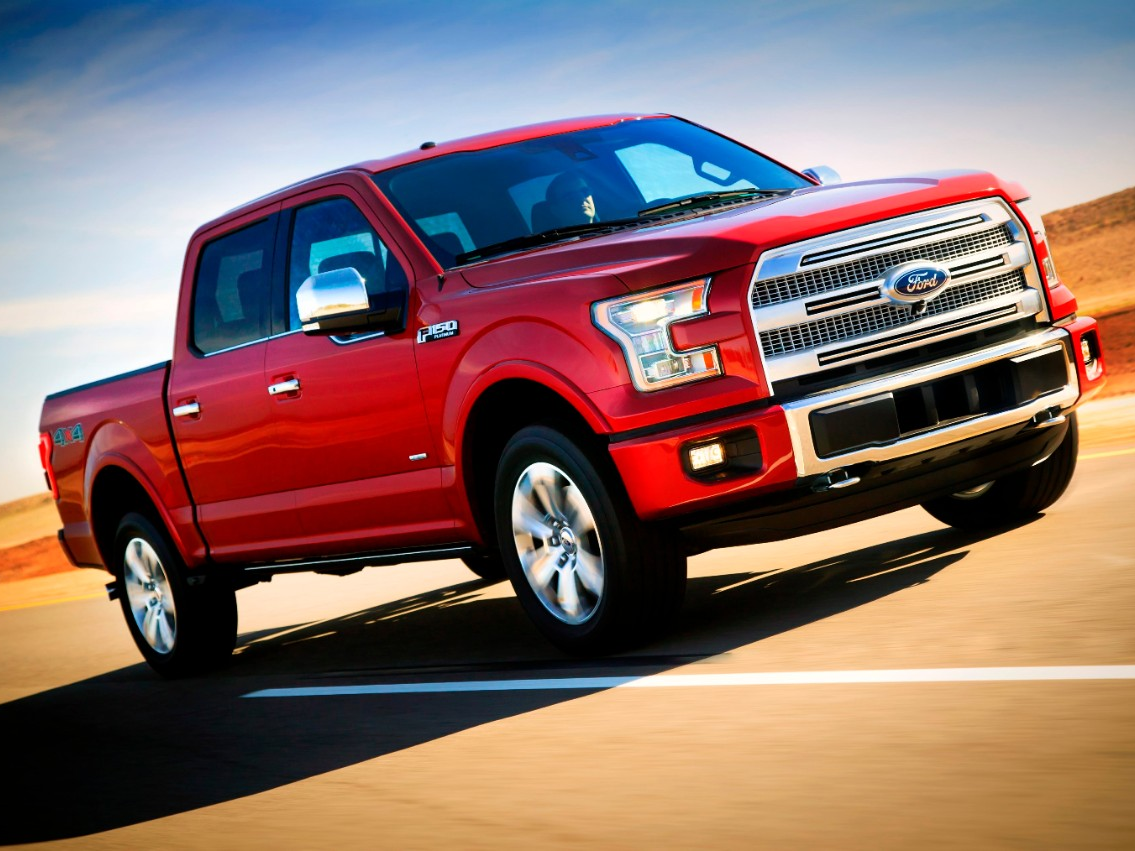
- 2015 Ford F-150 has more new Ford technology patents and/or patent applications than any truck in Ford history, offering customers innovative technologies throughout – everything from the tailgate to the front end
- All-new F-150 boasts more than 100 new Ford patents and/or patent applications, making this vehicle a benchmark for new technologies in Ford’s storied history of truck leadership
- A Ford-developed heat treatment method for aluminum alloy nearly doubles the strength of the material, helping achieve better dent and ding resistance while reducing weight
From its tailgate step to the LED spotlights found on the side mirrors, the next-generation 2015 Ford F-150’s new features and technologies make it the most patented truck in company history.
“The all-new F-150 is loaded with innovation,” said Alana Strager, Ford program analyst charged with tracking new innovations for the 2015 truck. “Ford engineers filed more than 100 new patents for technologies on this truck as they have worked to redefine the light-duty pickup for the next generation.”
Patents and patent applications abound for state-of-the-art technologies covering new features and breakthroughs that will benefit customers of the all-new 2015 F-150. The scope of these innovations includes every part of the truck – body, exterior, interior, chassis, design, electrical and engine – as well as its manufacturing processes.
Patenting a smarter truck
Examples of Ford’s state-of-the-art technologies on the new 2015 F-150 include segment-exclusive LED spotlights found on the side mirrors, innovative remote tailgate release and smart trailer tow features that make towing easier.
- Innovative LED side-mirror spotlights allow customers to
illuminate the side of the vehicle for tasks from setting up a campsite
to changing a tire
- Remote tailgate release automatically lowers the tailgate with the push of a button on the key fob – a first for a pickup truck
- Ford’s pioneering tailgate step has been completely reengineered
so it fully integrates into the tailgate, making it virtually invisible
when not in use. The tailgate drops down into position in one easy
motion. The grab handle is now housed inside the tailgate, which keeps
the inner surface of the tailgate uniformly flat
- BoxLink™ cargo management system includes lockable,
die-cast aluminum tie-down cleats, and provides a unique interface to
the box for improved flexibility and organization, as well as additional
locations for tie-downs. Available segment-first cargo ramps can be
stowed on the sides of the pickup box via the BoxLink system and mounted
quickly on the tailgate to enable easy loading of ATVs, motorcycles or
mowers
Other smart features never offered before on a Ford pickup include 360-degree camera view, integrated loading ramps stowed in the pickup bed, 400-watt power outlets inside the cab and LED headlights.
Patenting toughness
Mounted on an exceptionally strong and well-proven high-strength steel frame, the all-new Ford F-150 incorporates the latest high-strength, military-grade, aluminum alloys to form the body and cargo box.
The aluminum is heat-treated using a proprietary method developed by Ford engineers that nearly doubles the strength of the metal. Ford is first in the auto industry to use this methodology.
Additionally, Ford engineers have filed patent applications for spot welding methods, adhesives and hydroforming this first-of-its-kind truck.
“Ford is teaching the world how to build a next-generation truck, and the more than 100 patents filed by the F-150 team for technologies on the 2015 truck further proves these Ford engineers and designers lead the automotive industry in innovation,” said Strager.
5/23/14
Ford Dearborn Truck Plant Celebrates 10 Years of Sustainable Manufacturing; Prepares to Build All-New 2015 Ford F-150
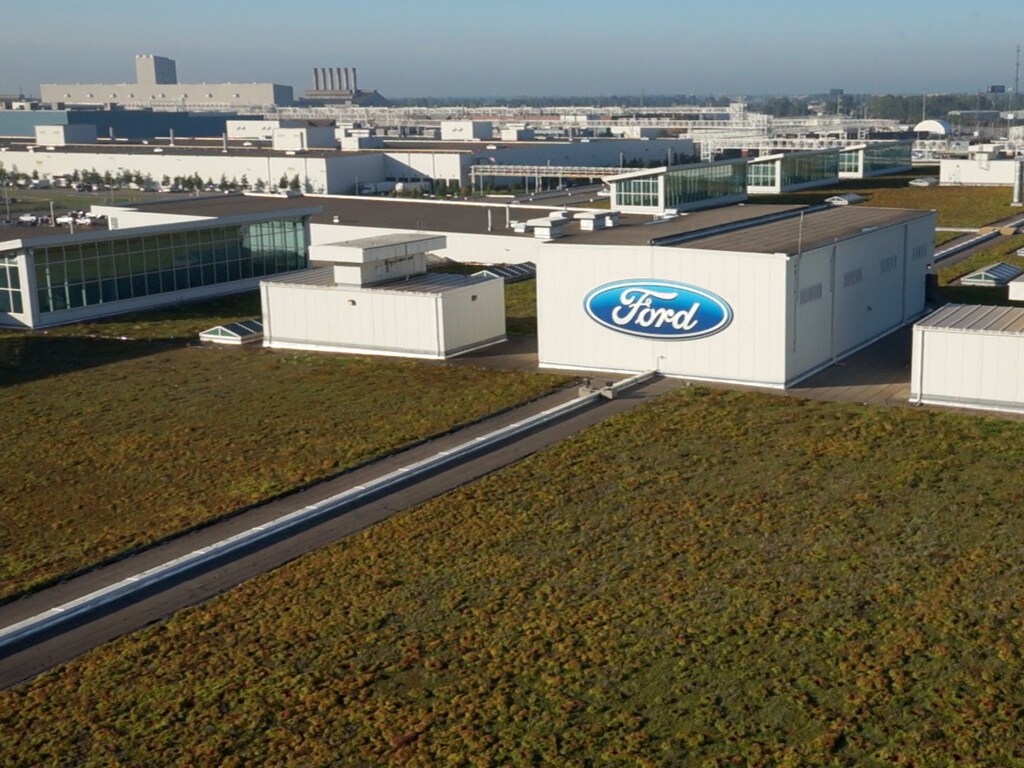
- Along with Dearborn Truck Plant marking 10 years of sustainable manufacturing and 2.6 million units of Ford F-150 production, Ford Rouge factory tour celebrates its 10th year; a complete tour renovation starts this summer
- Dearborn Truck Plant upholds Ford’s blueprint for sustainability through its living roof and recycling programs; the facility has recycled more than 20 million pounds of cardboard, paper, plastic and wood since its opening
- Dearborn Truck Plant will begin building the all-new 2015 Ford F-150 in late 2014
Ford Motor Company is celebrating the 10-year anniversary of its groundbreaking Dearborn Truck Plant. As the centerpiece of Ford Rouge Center, Dearborn Truck Plant was conceived as Ford’s vision of sustainable manufacturing and has served as flagship for the company’s next generation of lean and flexible plants.
Dearborn Truck Plant has produced more than 2.6 million F-150 trucks since it opened in May 2004. Once home to the iconic Ford Mustang, the plant now has more than 3,600 employees on a three-crew operating pattern producing 1,200 F-150 trucks daily. Later this year, production of the all-new 2015 Ford F-150 gets under way at Dearborn Truck Plant.
F-150 is part of the Ford F-Series lineup, America’s best-selling truck for 37 consecutive years and America’s best-selling vehicle for 32 years.
“Dearborn Truck Plant has
set world-class standards for efficiency and environmentally friendly
manufacturing processes,” said Bruce Hettle, vice president, Ford North
America manufacturing.
“There is no better way to celebrate 10 years of top-notch manufacturing than gearing up to build the all-new F-150. The hardworking men and women of Dearborn Truck are excited to bring this Built Ford Tough truck to our customers.”
The plant is capable of building up to nine models on three vehicle platforms. It has close to 350 robots between its body and paint shops and final assembly area. This summer, the body shop will undergo a complete renovation in preparation to build the all-new F-150.
Living roof and sustainability efforts
Once noted as the world’s largest living roof by Guinness World Records®, and now the largest in North America, Dearborn Truck Plant’s roof has flourished as an environmental touchstone since its installation in 2004. At 10.4 acres, the living roof sustains a diverse ecosystem, removes carbon dioxide from the atmosphere and reduces energy use. It is part of an innovative storm water management system that reduces runoff and costs two-thirds less than a conventional water treatment process.
The facility maximizes the use of natural light and ventilation to reduce the financial and environmental costs of heating, cooling and powering the plant. The paint shop uses water-based primer and base coat systems that minimize volatile emissions while also maintaining paint quality.
Efforts are made to use as much recyclable packaging as possible to reduce the volume of waste. A total waste management system incorporating transportation, disposal, recycling, reclamation and reuse of plant waste is in operation at Dearborn Truck Plant. To date, the facility has recycled more than 20 million pounds of cardboard, paper, plastic and wood.
Ford Rouge factory tour
More than 1 million visitors from all over the world have taken the Ford Rouge factory tour, including racing legend Sir Jackie Stewart, U.S. Senate Majority Leader Harry Reid, former U.S. Secretary of Transportation Ray LaHood, former Speaker of the U.S. House of Representatives Dennis Hastert and former President of Mexico Vicente Fox.
A self-guided, six-part experience, the tour is designed to educate visitors on the history of Ford Rouge Center and provide a 360-degree look at how vehicles are made. Visitors are afforded the opportunity to view the final assembly process of Ford F-150 from an elevated walkway.
This summer, the tour program undergoes a renovation, which will include new films, exhibits and hands-on experiences tied to the launch of the all-new F-150.
“The Rouge factory tour is a true gem, in that it showcases the history and the legacy of Henry Ford’s industrial vision, while highlighting the innovation taking place at Ford today,” said Cynthia Jones, general manager, Ford Rouge factory tour. “As we evolve the tour, we plan to create something memorable that people young and old can enjoy for years to come.”
The tour has been recognized as one of 10 great places that inspire innovation by USA Today. It is ranked No. 4 on Time magazine’s “Detroit: 10 Things to Do” list.
2015 Ford F-150
Along with Kansas City Assembly Plant in Claycomo, Mo., Dearborn Truck Plant will be the production site of the all-new Ford F-150, which sets the standard for the future of trucks. The use of advanced materials – including more high-strength steel than ever in the frame and high-strength, military-grade, aluminum alloy throughout the vehicle body – improves durability while saving up to 700 pounds, giving customers greater towing, payload and fuel efficiency performance.

When it arrives in showrooms later this year, the all-new F-150 will have undergone more than 10 million miles of torture testing to ensure it meets or exceeds Built Ford Tough standards.
In addition to an all-new 2.7-liter EcoBoost® engine offering, the 2015 F-150 features a complete lineup of powertrains to let customers tailor the toughest, smartest, most capable pickup truck ever to their needs. The 3.5-liter EcoBoost engine returns, an all-new normally aspirated 3.5-liter V6 debuts and there is an improved 5.0-liter V8.
5/22/14
All-New Ford F-650/F-750 Diesel Will Provide Best-in-Class Standard Horsepower and Torque

- 2016 Ford F-650/F-750 to offer three diesel power ratings, including best-in-class standard horsepower and torque
- Customers can pick the diesel engine power rating that best suits their needs, with no vocational restrictions
- Ford 6.7-liter Power Stroke® V8 turbo diesel engine is paired with commercial-grade six-speed Ford TorqShift® HD automatic transmission optimized for medium-duty vocations
Ford, America’s truck leader, announces the all-new F-650/F-750 medium-duty truck lineup with 6.7-liter Power Stroke® V8 turbo diesel will feature three engine power ratings, including best-in-class standard diesel horsepower and torque, and no vocational limits on top ratings.
The three diesel power levels available for the 2016 Ford F-650/F-750 are:
- 270 horsepower/675 lb.-ft. torque (best-in-class standard)
- 300 horsepower /700 lb.-ft. torque
- 330 horsepower/725 lb.-ft. torque
Multiple ratings provide customers with the flexibility to scale engine power to work applications and operations.
“While other medium-duty truck manufacturers restrict top horsepower and torque ratings to certain applications, such as emergency services, the all-new F-650/F-750 will arrive with no vocational restrictions,” said John Ruppert, general manager Ford Commercial Vehicle Sales and Marketing. “We’re giving our customers the power of choice to determine what’s best for their business.”
The second generation 6.7-liter Power Stroke V8 turbo diesel builds upon the success of the diesel engine found in the F-Series Super Duty lineup. The F-650/F-750 6.7-liter Power Stroke and commercial-grade six-speed TorqShift® HD automatic transmission have been developed and tested for medium-duty applications. The powertrain offers an unsurpassed five-year/250,000-mile limited warranty.
Ford is the only medium-duty truck manufacturer that designs and builds its own diesel engine and transmission combination – ensuring the powertrain will work seamlessly with all chassis components and vehicle calibrations. This approach enables Ford engineers to optimize vehicle performance across the entire lineup and further refine the powertrain to the specific needs of the customer.
“Engineering the truck and powertrain together is the best way to deliver a great product for the customer,” said John Davis, Ford commercial vehicle chief nameplate engineer.
Key innovations on the 6.7-liter Power Stroke V8 turbo diesel are its compacted graphite iron engine block that enhances durability and helps reduce noise, vibration and harshness. The reverse-flow layout places the exhaust inside the engine’s V-shape, while the air intake is positioned on the outside of the V. This segment-exclusive design naturally improves a variety of attributes.
Shorter airflow from the exhaust system to the turbocharger sitting between the engine’s cylinder banks improves turbo responsiveness – key to providing torque quickly to truck customers when they need it most. Positioning the turbo inside the engine’s valley helps isolate the engine’s hottest temperatures, aiding performance and efficiency while also reducing noise, vibration and harshness for improved driver comfort.
During testing, the 6.7-liter Power Stroke V8 turbo diesel endured the equivalent of 500,000-plus miles on an engine dynamometer, replicating the duty cycle of the harshest-use customer.
In addition to its Power Stroke diesel, Ford remains the segment-exclusive automaker to offer a gasoline-powered engine for a medium duty truck. The 330 horsepower, 440 pounds-feet of torque 6.8-liter V10 is now available for both F-650 and F-750 models with the TorqShift® HD six-speed automatic transmission. The 6.8-liter V10 can be factory-prepped for converting to compressed natural gas or liquid propane gas as cost-effective alternatives to gasoline.
The Ford F-650/F-750 anchors Ford’s Commercial Truck lineup – America’s best-selling line of commercial trucks for 29 years – giving vocational customers an unmatched one-stop shop to meet their needs, from a Class 1 Ford Transit Connect cargo van to a Class 7 Ford F-750 tractor rig. Every truck and van in the Ford Commercial Truck lineup will be all-new or significantly refreshed in the next 18 months.
Offered in Regular Cab, SuperCab and Crew Cab styles and in straight frame, dock height and an all-new dedicated tractor model for heavy towing applications, the 2016 F-650/F-750 features a bold look inside and out.
The new medium-duty truck lineup will be available in spring 2015.
5/21/14
The Wait Is Almost Over! Dealer Order Banks Now Open for All-New 2015 Ford Mustang
- Ford dealers can now begin placing orders for 2015 Mustang fastback
- 2015 Mustang fastback includes many new standard features such as fully independent suspension, push-button start, next-generation SYNC® AppLink™ and a choice of three powerful engines
- All-new Mustang EcoBoost® and Mustang GT available with 50 Years Appearance Package
For Ford Mustang fans everywhere, today they are one big step closer to experiencing the next generation as Ford has begun accepting dealer orders for the 2015 fastback.
Ever since the world got its first look at the all-new 2015 Mustang nearly six months ago, the anticipation has been palpable. Ford engineers have been racking up millions of testing miles, refining each system to make sure everything is just right before the first Mustangs reach customers later this year.
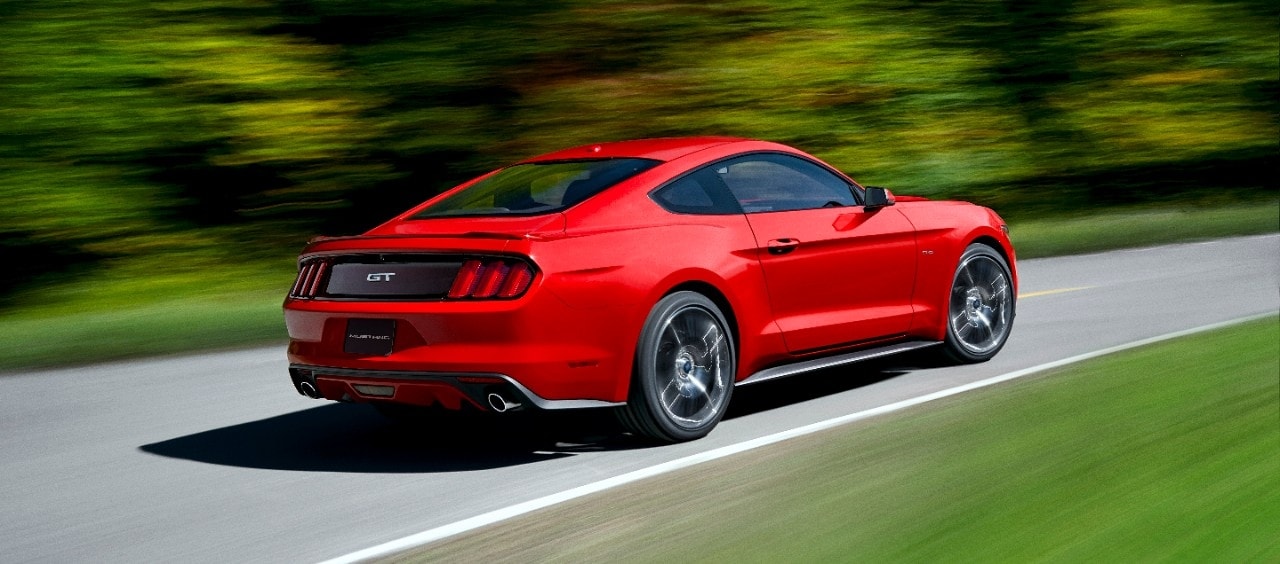
“From the six cities around the globe where we revealed the all-new Mustang, to auto shows to the recent 50-year celebration events, we’ve received an amazing response from people when they finally see the new model,” said Steve Ling, Ford car marketing manager. “This car is all-new with enhanced sophistication and craftsmanship, but it still exudes the essence of Mustang that’s been honed throughout its history.”
Customers can choose from three available powerplants for the 2015 Mustang, each of which can be paired with an upgraded six-speed manual or six-speed automatic transmission with paddle shifters:
- All-new 2.3-liter EcoBoost®, producing more than 305 horsepower and 300 lb.-ft. of torque and with projected class-leading fuel efficiency
- Upgraded 5.0-liter V8, generating more than 420 horsepower and 390 lb.-ft. of torque
- Upgraded 3.7-liter V6, producing more than 300 horsepower and 270 lb.-ft. of torque
In addition to a sleek new design and dramatically improved cabin, each 2015 Mustang adds an array of new standard features:
- Fully independent front and rear suspension for improved driving dynamics and ride quality
- Eight airbags including front, knee and side-impact protection for driver and front passenger
- Individual tire pressure monitor readouts for each wheel
- Rear view camera system
- High-intensity discharge headlamps with signature lighting
- Illuminated, locking glove box
- Leather-wrapped steering wheel with manual tilt and telescope adjustment
- Intelligent access, enabling the driver to enter without touching the key fob
- Push-button start
- SYNC® connectivity system with next-generation AppLink™ to control smartphone apps with simple voice commands; 4.2-inch color display and two USB ports
The ample standard equipment list can be further augmented with the availability of advanced technology features such as:
- Eight-inch, high-resolution touch-screen display and navigation
- Blind Spot Information System with cross-traffic alert upgraded with Doppler-effect radar sensors to provide both improved sensitivity at longer distances and better resistance to false alerts
- Adaptive cruise control and collision warning for the first time
- Track Apps provide a variety of on-track performance measurements for drivers
- Selectable drive modes feature lets the driver quickly adjust steering, throttle response, shift control and stability control settings by toggling between normal, snow-wet, sport and track modes
- Mustang GT easy to use electronic line lock and a launch control system that manages engine speed and brakes, giving drivers maximum and consistent acceleration at the track

A 50 Years appearance package is available for Mustang EcoBoost Premium and Mustang GT Premium models. The appearance package includes a chrome-accented grille, round 50 Years rear badge, 19x8.5-inch alloy wheels with 255/40R19 all-season tires, anniversary floor mats and unique seat and door-trim stitching.
The 2015 Ford Mustang fastback with 3.7-liter V6 starts at just $24,425 including destination and delivery charges in the United States. Mustang will be available from Ford dealers in North America this fall.
Subscribe to:
Posts (Atom)